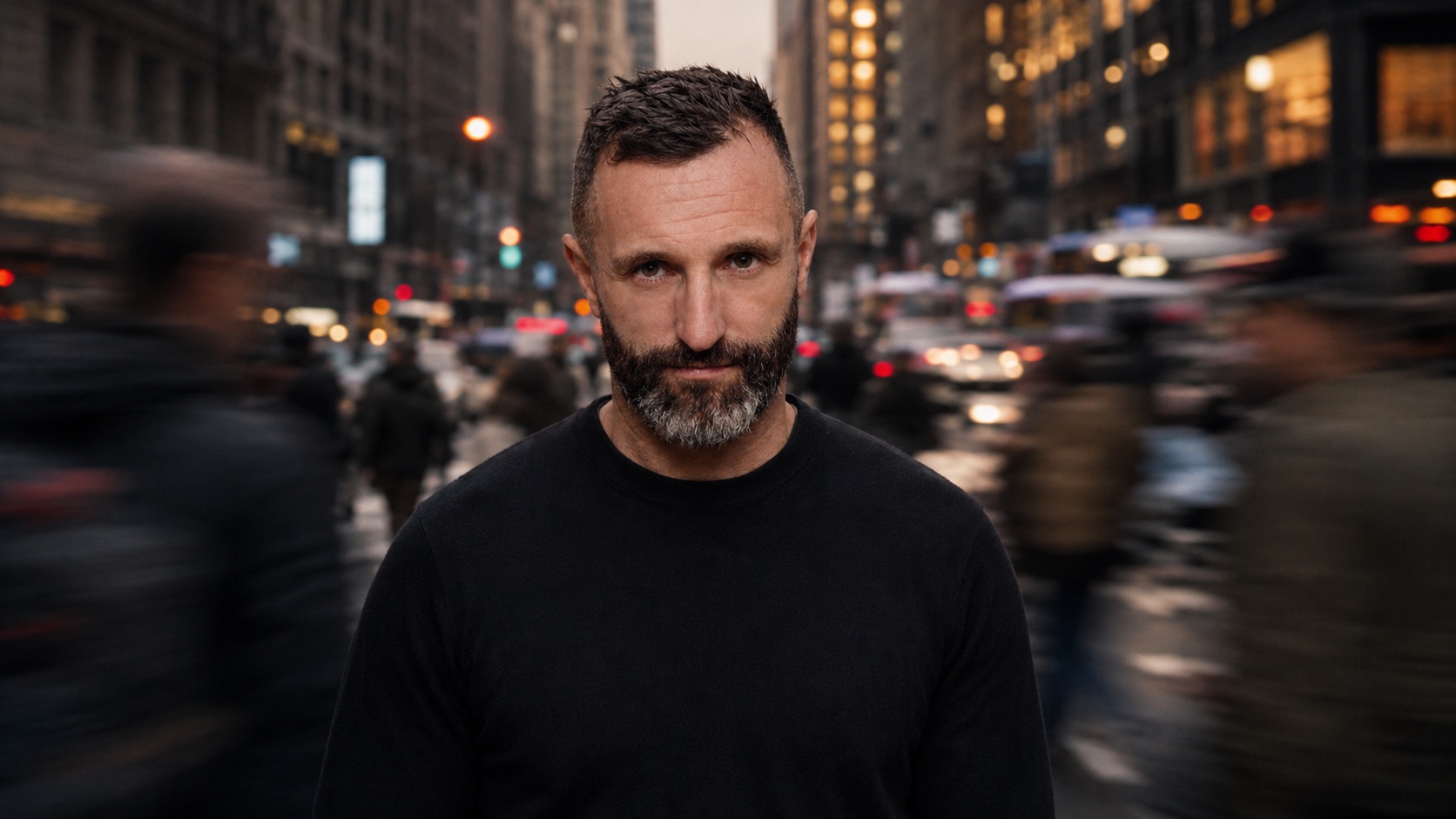
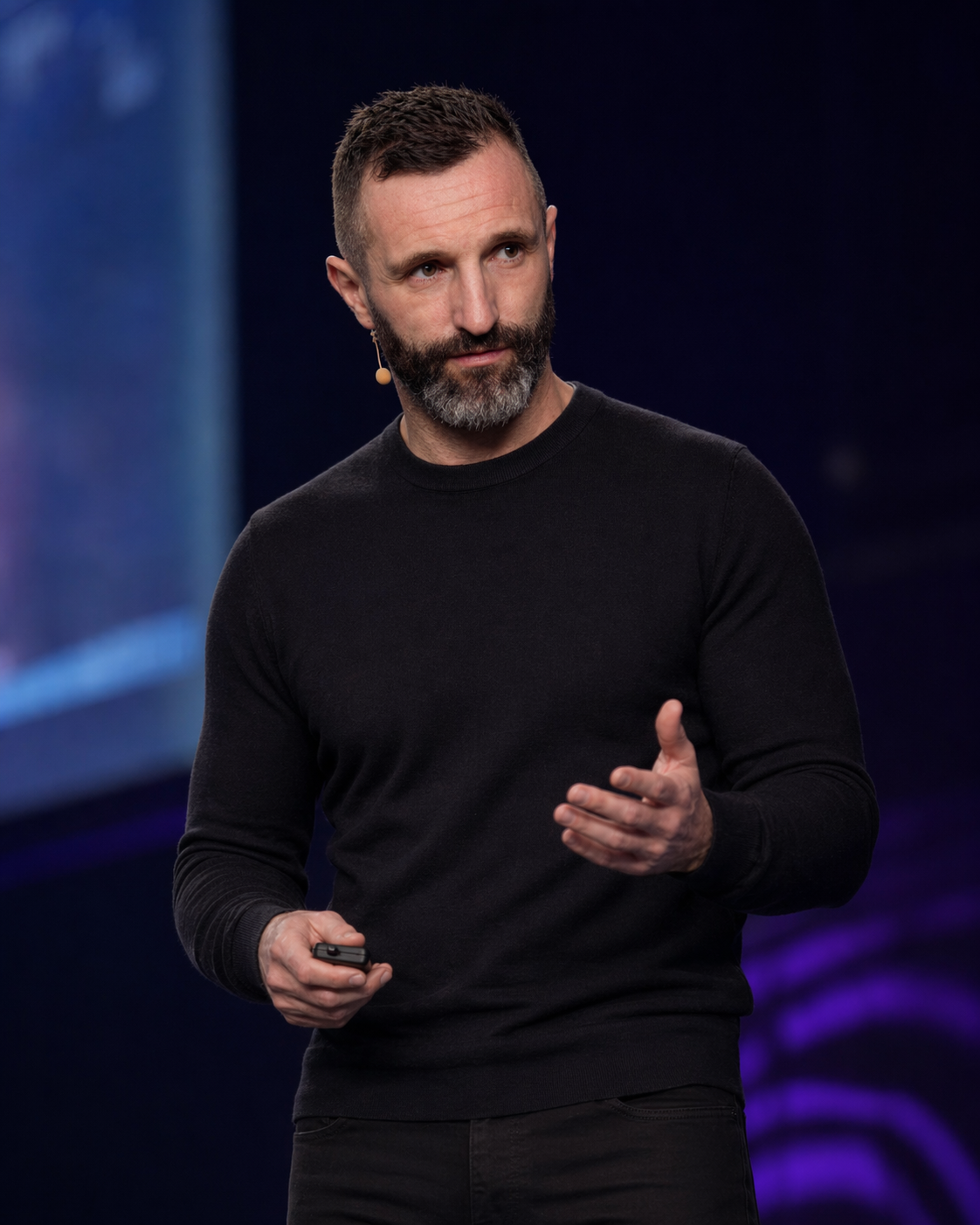
Wilson trained in two traditions that rarely meet.
The lab and the temple. Neuroscience and ancient wisdom. The body as instrument and the awareness that plays it. The flow state is where they finally meet.
Neuroscience · Biology · Human Performance · Ancient Wisdom
The Practice
What I teach is what I train.
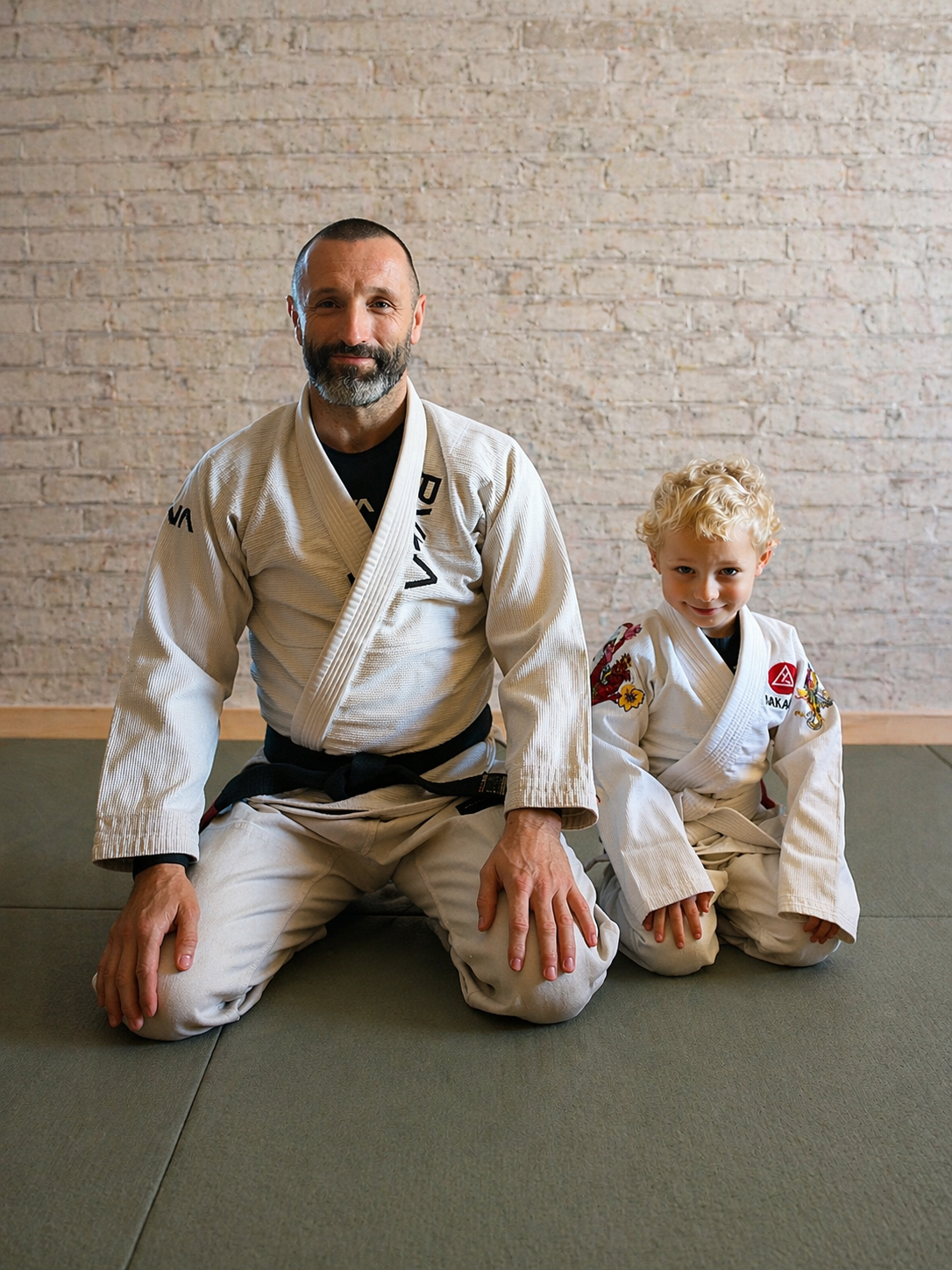
The reason for jiu-jitsu is not the belt. Jiu-jitsu is one of the cleanest training grounds I know for what the work is actually about. Staying calm while a system is trying to take you apart. Making clear decisions under direct pressure. Conserving energy so the head stays usable when the demand keeps escalating. Flow on demand, in the most uncooperative environment a body can be in.
What the mat trains is what the work trains everywhere else. The room is different, the mechanism is the same. Reading the system honestly. Returning to coherence when something pulls it away. Choosing where the seat sits when the moment escalates. Most of the people I work with are not on a mat. They are in a meeting, a green room, a difficult conversation, a launch. The mat is where I keep the practice honest in my own body. Lately, in the practice my son Leonides and I share.
The work shows up in the rooms my work does not pay for. With family. In stillness. In the small interruptions that test whether the framework is theory or practice. The bridge is something you walk, not something you describe.
The Approach
Two systems. One conversation.
The work treats the human as two systems in conversation. The body, with its measurable biology. The awareness that observes it. Most performance work upgrades one and ignores the other. The flow state lives in the place where the two finally cooperate.
The VehicleWhat we measure
The body, the conditioned circuits, the autonomic system. We work with heart rate variability as the primary signal, supported by lab testing for bloodwork and biomarkers, and the daily inputs that move the dial. Sleep, recovery, breath, attention, environment. The Vehicle is the instrument flow runs through, and it can be read precisely.
The DriverWhat we tune
The awareness that sits in the seat. The intrinsic spark, the part of the system that knows where it wants to go before reasoning catches up. The feedback of flow, the body forecasting the next move before the conscious mind has named it. The DEFAULT pattern that makes a moment feel unsafe before it has actually arrived. Tuning the Driver is the work the Vehicle alone cannot do.
CoherenceWhere flow rests
The state in which breath, heart rhythm and attention stop fighting each other. It is measurable in HRV. It is felt as ease. It is the substrate the flow state returns to when the noise comes down. Coherence is what the Vehicle and the Driver produce when they are finally in the same conversation.
The Bridge
What the ancients called the breath of life, physiologists now measure as vagal tone.
In the late nineties, I was training in England against four kickboxers. I weighed 171 pounds. The smallest of them weighed 224. Round one went too well. My coach changed the rule. You are not allowed to hit back.
For 45 minutes I did not. I survived, then started to thrive. One of them tried to climb out of the ring out of frustration. The thing I remember most clearly is what I did between rounds. I anchored my attention to my feet and my breath. The inhale braced the system. The exhale released it. Push and pull. Tension and ease. The two halves of the autonomic nervous system holding each other in something coherent.
There was no vocabulary for it then. I called it staying present. Years later, the physiology had a name for it. Sympathetic and parasympathetic. Heart rate variability. The thing I had been doing in the ring with my feet and my breath was the same thing the lab measures with sensors and graphs.
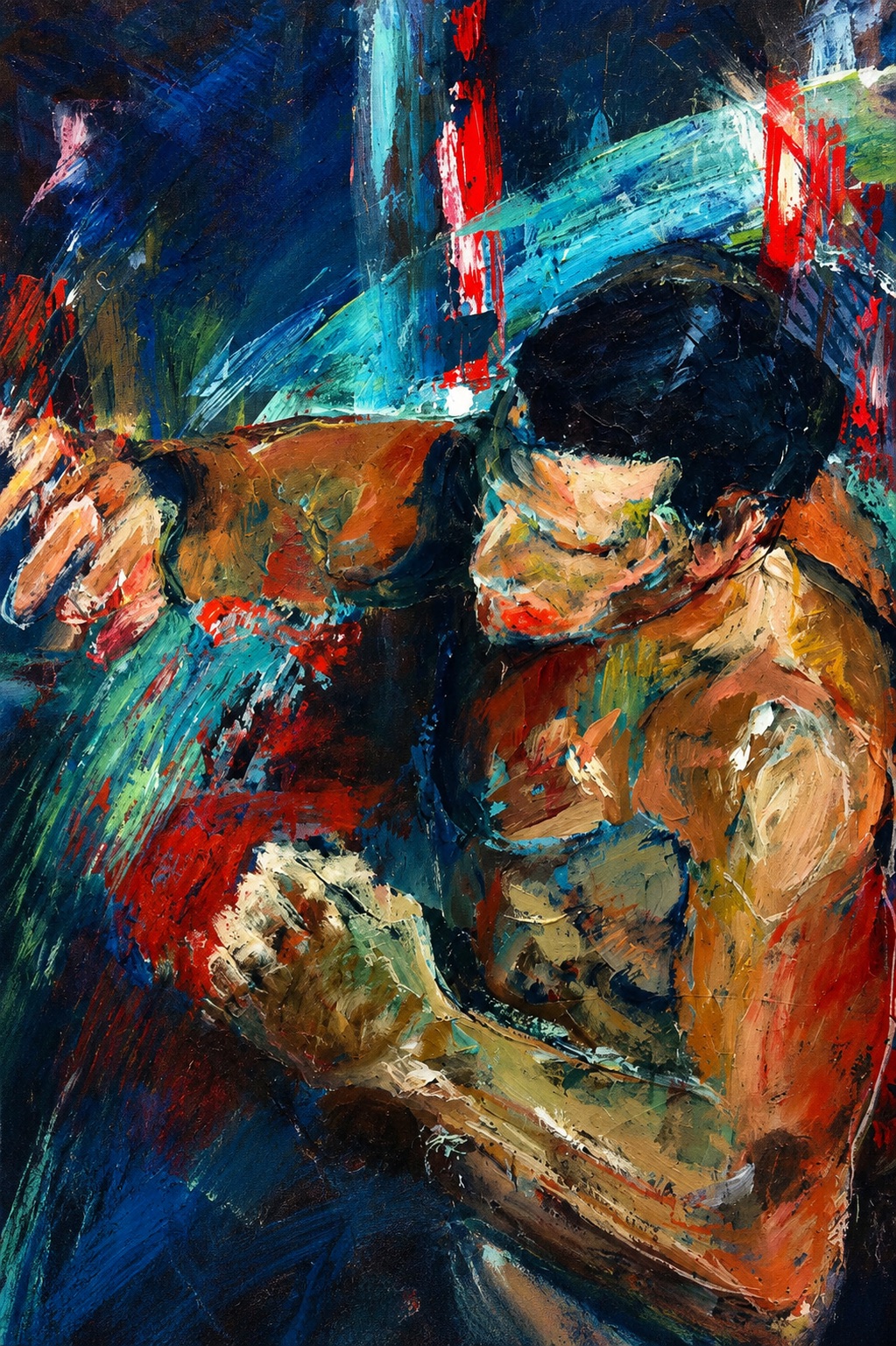
Painted study · Wilson Meloncelli
Two worlds shape this work. The lab and the temple. Neuroscience and ancient wisdom. They use different vocabulary. They cover the same territory. What contemplative traditions named the witness, neuroscience now describes as the predictive model and the seat that observes them. What they taught about breath as life force, physiologists now measure as heart rate variability and autonomic capacity. The science is not replacing the wisdom. The wisdom is not decorating the science. They are two languages for the same instrument.
Most performance work picks a side. The clinical side strips out the depth. The spiritual side strips out the mechanism. The practice happens on the bridge between them because the bridge is where the work actually lives. The science gives the language precision. The wisdom gives it depth. Together they let us name what most people experience but cannot articulate. The feeling that something in the system is out of alignment, and the practice of bringing it back into rhythm.
The clearest example is the heart. Heart rate variability is the direct line between the two languages. Sensors can read it. Breath can train it. Sleep, thought and environment all touch it. It is biological enough for the lab and intimate enough for the temple. HRV is where the bridge stops being a metaphor and becomes a measurement. It is also one of the most reliable signals we have for whether the system is configured to access flow, or configured to defend itself.
The Book
The Mechanics of Being.
A practical, embodied operating system for the human nervous system. The book bridges what physiologists now measure with what contemplative traditions have always taught about meaning, attention and the seat of awareness.
Written for the high performer who has tried discipline, tried mindset, tried the apps, and is still hitting the same internal wall. Less self-help, more a schematic.
There is a video tape from the seventies. A man in a karate gi. Long hair tied back, a beard. A Scottish Miyamoto Musashi, although nobody used those words at the time. He is my uncle.
The drill he teaches starts with a hammer fist. Later, a wooden sword. Later still, a staff. The shape is always the same. He moves into the strike. I move out of it. He gradually increases the speed. He shortens the distance. He keeps closing the gap until there is only one place left to stand, which is the present moment.
There is no choice in it. The body has to be there before the conscious mind notices it has arrived. Action and awareness are no longer two things.
The samurai called it no mind. Mu-shin. A mind not fixed, not occupied, open to everything. They named it before anyone had measured an autonomic nervous system.
That drill, in a Scottish dojo, in childhood, was the first lived encounter with what would later become the entire body of work. Flow as a configuration of the system, not a feeling. A skill held precisely at the edge of capacity, before there was vocabulary for any of it.
The question the drill planted, before there was language for it, has shaped everything since. Why can the same person, with the same skill, perform freely on one day and lock up the next? Nothing about their craft has changed. Their preparation is identical. The room is the same room. And still, something in the system has decided this moment is different.
The Lineage
Lunch with the master.
Autumn 2012. The master invited me to lunch. He had prepared pasta carbonara. I do not eat pasta. When in Rome.
Within minutes, the room felt easy. We ate slowly. Afterwards, he walked me through his home, shared stories, gave me a small symbol he said would help me hold my own under hostile attention. We spoke for hours. He taught me that flow can be cultivated in anything once you have built a particular kind of self underneath it. The mind of an adult, the heart of a child. A warrior of self. The courage to be you, no matter the surroundings, inside or outside.
I asked him a single question. How do you do that.
His answer has stayed with me almost word for word. Don't think. The path is like walking a sword's blade. A slip in either direction could be disaster. You need to learn to see one, hear one, feel one, to be one.
The sword's edge he described is the same edge Csíkszentmihályi and Nakamura mapped academically as the skill-to-challenge ratio. The same edge HRV coherence describes physiologically. The same edge the wooden sword drill placed me on as a child. Three traditions, one ridge.
And then he said the line that has named the rest of the work. You must awaken and cultivate a maverick from within.
The Mavericks brand began in that dining room. Not as a marketing word. As a teaching.
The Way of Flow
Flow is not a peak you reach. It is a frequency you return to when the noise comes down.
Wilson Meloncelli
Where to begin
Two assessments. One way back into rhythm.
A short, structured assessment that maps where your system is right now and what to work on next. No pressure. No hype. Just a clearer read of the configuration you are operating from.
The Flow Assessment
Where is your system right now?
A 33-question assessment that maps your current state across the 11 layers of flow. Nervous system regulation, attention, recovery and rhythm. You will receive a personalised report and the next step that fits your specific configuration.
A team assessment built for founders and leaders who suspect the bottleneck is not strategy. Reveals where the system is fragmented, where coherence is compromised, and what to work on first.